

Mondays with Mike: How We Use Academic Data
…And Why You Can Have Confidence
Dear PCA Community,
At our State of the School gathering, I spoke briefly about how we use academic data at PCA.
In today’s Mondays with Mike, Dr. Carrie Abood and I take that conversation deeper— to explain how evidence works together in a healthy school.
At PCA, we are in a strong and steady stage of institutional development. Over the past several years, we focused intentionally on stabilizing and strengthening the school—spiritually, academically, culturally, and operationally. As that foundation has solidified, our work has naturally shifted toward deeper coherence — aligning curriculum vertically, clarifying outcomes, and refining how we assess student growth. That is not a correction; it is maturation.
When we think about academic excellence, we do not rely on a single measure. We look at a layered system of evidence:
- Classroom-anchored evidence — daily work, writing, projects, and teacher feedback
- Course performance — tied to clear criteria and calibrated expectations
- Interim growth measures such as MAP
- External validation — SAT, AP, dual credit, and long-term readiness
Our current academic focus is strengthening coherence in that first and second layer—ensuring alignment and clarity across grade levels—while continuing to use the other layers to confirm and refine what we see.
You can have confidence that your child is learning and growing—even as we continue strengthening the system that supports them.
Please listen below to dive deeper on this important concept.
Mike Runey
Head of School
Portsmouth Christian Academy
Key Takeaways
- Academic evidence must be ordered wisely; classroom learning comes first.
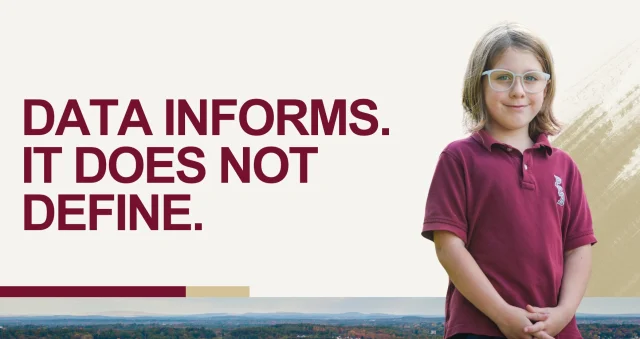
- MAP is a checkpoint that helps us monitor growth—it does not define a child.
- When multiple measures align, we gain confidence. When they diverge, we investigate and adjust.
- Data informs real instructional decisions—such as refining math sequencing and strengthening reading support.
- Our current work is about coherence and integration, building on a stable foundation
Episode Timestamps
00:00–02:00 — Why we are revisiting data and what it does not mean
02:00–04:15 — Data as a “flashlight”: growth and classroom context
04:15–06:45 — How teachers actually use assessment results
06:45–08:30 — Understanding NWEA and RIT scores
08:30–10:00 — Early literacy and DIBELS
10:00–11:30 — Message to students and parents
11:30–13:30 — Beyond academics: athletics, arts, participation
13:30–15:15 — Upper school indicators: PSAT, SAT, AP
15:15–17:15 — Holistic use of data and closing encouragement
To hear past episodes, share with your loved ones and friends, follow, and even review us, check out our PCA Podcast on these platforms: