

Alumni Stories: Isaac Moore ’11
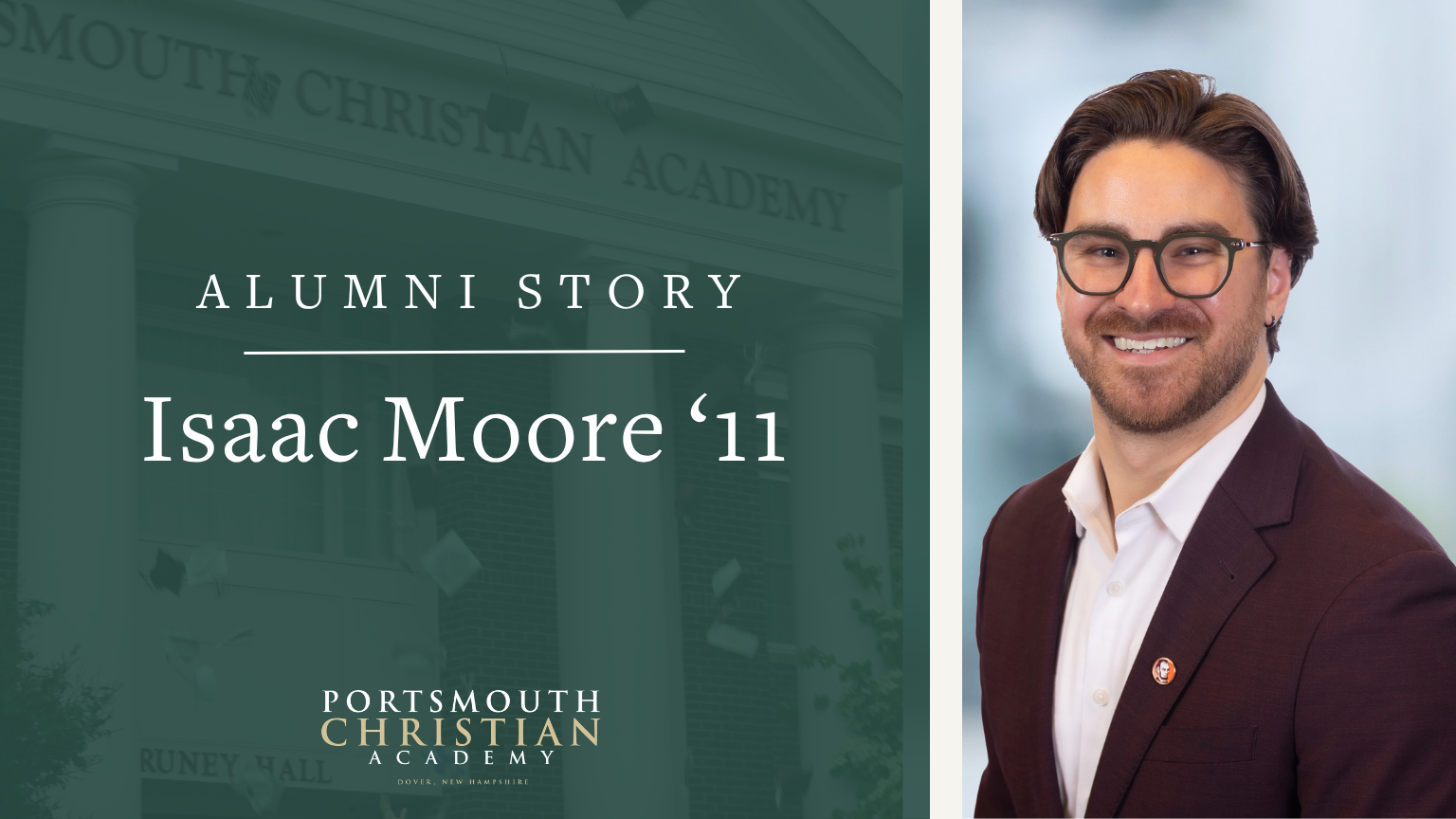
Alumni Spotlight: Isaac Moore, Class of 2011
Stepping Out of the Boat
For Isaac Moore, PCA was more than a school; it was home. From fourth grade through graduation in 2011, Isaac grew up in the classrooms, on the stage, on the baseball field, and in the relationships that still shape his life today. His journey since PCA has taken him from broadcast journalism and Super Bowls to corporate communications and now into pastoral ministry. Through it all, one thread remains constant: his deep love for people.
When did you begin at PCA?
I started in fourth grade. I had come from a very small Christian school. It was almost like a homeschool co-op and my parents wanted something a little bigger but still grounded in Christian education. I don’t remember all the logistics because I was so young, but I know that was the heart behind it.
By fifth grade, I really started to feel at home. I became more confident, made friends, and started getting involved in drama productions. That’s when PCA stopped feeling like “a new school” and started feeling like my place.
What do you remember most about middle school?
Middle school stands out more vividly for me.
I remember being in Mr. Connell’s class in eighth grade. He would actually come out and play football with us at recess, which I thought was the coolest thing ever. That kind of engagement, teachers who genuinely stepped into your world, meant a lot.
Drama was also a huge part of those years. I was in The Music Man in eighth grade, performing alongside Upper School students, which felt like a big deal. We also performed The Screwtape Letters in sixth grade, and in seventh grade I was part of a production called Terezin: Children of the Holocaust. That one was heavy. It was set in a concentration camp and ended with the children walking to the gas chamber.
Looking back, it was intense for middle schoolers, but it impacted me deeply. It made me grapple early on with the realities of evil, suffering, and history. It wasn’t just performing; it shaped how I thought about the world.
That kind of engagement, teachers who genuinely stepped into your world, meant a lot.
You were involved in both sports and theatre. What did that look like in high school?
I did drama through freshman year, then shifted more fully into sports. I played basketball and baseball, and my junior year our baseball team won the state championship in 2010. I played center field. That’s still one of the greatest memories.
PCA being a smaller school meant I knew everyone. The friendships forged there are still meaningful today. Some of my closest friends are from the Class of 2011. When we reconnect, it feels like no time has passed.
That sense of community is actually why I chose to stay at PCA for high school. I considered other options, but PCA felt safe and familiar, and those relationships mattered to me
PCA being a smaller school meant I knew everyone. The friendships forged there are still meaningful today.
That sense of community is actually why I chose to stay at PCA for high school.
Were there teachers who particularly shaped you?
Absolutely.
Mr. Pease’s history class senior year was incredible. We went on field trips all over the area to historical sites. It was a small group of seniors, and it made me appreciate where I grew up in a new way.
Mr. Beal’s class had a big impact on me, too. Especially the public speaking unit. He had a reputation for being tough, but I loved being challenged. I learned how to write for speech instead of just writing to be read. Something clicked for me during that unit. I came alive in front of people.
That class helped spark my interest in broadcast journalism. I realized I loved communicating ideas out loud.
And I have to admit, I may have set the record for most tardies in PCA history. I was always late to homeroom. There were consequences, and I definitely didn’t earn off-campus privileges senior year. But even with my flaws, I always had good relationships with my teachers. They saw me, even when I was spilling Aroma Joe’s coffee on myself before class, which, unfortunately, happened more than once… usually in Mr. Beal’s room.
What was graduation like for you?
Overwhelming in the best way.
It felt surreal. PCA had been my world for most of my life at that point. I was excited. I definitely had senioritis, but there was also fear of the unknown. I was heading to Boston to attend Emerson College for broadcast journalism, and that was a big leap.
There’s always that tension at graduation: excitement for what’s next and grief over what you’re leaving.
What was college like at Emerson?
Emerson was intense.
It didn’t feel like four years of college, it felt like four years of internship. Everyone there was highly talented, highly driven, and very career focused. It was competitive.
I had incredible opportunities. I worked on the Patriots’ digital team. I went to two Super Bowls. I traveled to spring training in Florida. Professionally, it was amazing.
But by senior year, I was burned out. I experienced a mental breakdown and had to step away from school briefly. By the time I graduated, I realized that entering the broadcast field, especially starting in a small market far from home, wasn’t wise for me emotionally or mentally.
So, I moved back to New Hampshire.
What happened after college?
I worked briefly at Aroma Joe’s in an administrative role and later moved into a communications position at Liberty Mutual (which later became Lincoln Financial). The corporate world gave me stability and financial freedom, even if I didn’t always love working for a large corporation.
But during that time, I was in a really dark place mentally and spiritually. I was deeply anxious and depressed. I wasn’t sleeping. I felt stuck.
One Sunday in early 2016, after reaching a breaking point, I went back to the church I grew up in. I showed up late, sat in the back, and honestly just needed a hug.
A family friend walked in, saw me, and gave me the kind of hug that felt like walls breaking down. During the service, I felt something shift. It wasn’t about information anymore, it was an experience of grace.
I felt loved without needing to perform.
That moment didn’t magically erase anxiety or depression. But it changed my foundation. I wasn’t alone anymore. I began re-engaging in church leadership, community, and spiritual formation in a way that was deeply personal.
And now you’re stepping into pastoral ministry?
Yes. After years of discernment, theological training, and leadership development at my church, I’m stepping into an associate pastor role.
It’s exciting and honestly, nerve-wracking.
This isn’t just a career shift. It feels like stepping out of the boat, like Peter. I’ve sensed some kind of calling since high school, even back in speech class, but now it feels real and weighty.
There’s responsibility in caring for people. There’s humility in realizing I’m still just as broken and in need of grace as anyone else. But I love people. I love hearing stories. I love walking with others.
And PCA was part of forming that in me academically, relationally, spiritually.

What is your advice to PCA Upper School students?
I would say this: don’t coast through these years.
It’s really easy to treat high school as something you just survive or something that just happens to you. But PCA gives you an opportunity, academically, spiritually, relationally, that you won’t fully appreciate until later.
Take ownership of your faith. Don’t just inherit it from your parents or your teachers. Ask hard questions. Wrestle with it. Make it your own now, not later when you’re in the middle of a crisis.
Also, lean into your classes. I didn’t always realize it at the time, but the discipline of studying, writing, speaking in front of people, engaging history and literature, those things shaped how I think today. They trained me to articulate ideas and engage the world thoughtfully.
And finally, don’t underestimate the people around you. The friendships, the mentors, the teachers who push you, those relationships matter more than you know. Stay connected. Be present. Show up.
These years are forming you. Take them seriously.
PCA was part of forming that in me academically, relationally, spiritually.