Alumni Stories: Julie Pease
Alumni Spotlight: Julie Pease, Class of 2013
Meet Julie Pease ’13. From growing up at PCA to serving on the frontlines of global missions, alumna Julie Pease (Class of 2013) has followed God’s calling with courage and faith. Today, she serves as a Health Program Manager with Samaritan’s Purse in the Middle East, supporting medical programs that bring both physical care and the hope of the gospel to communities in crisis. In this interview, Julie reflects on her time at PCA, the teachers and experiences that shaped her, and the unexpected journey God has led her on—from nursing school in Texas to ministry in Ecuador, and now to a region where faith and resilience are essential.
I am so thankful to have had this opportunity to interview the lovely Ms. Julie Pease, class of 2013. Unfortunately, due to security concerns, I can’t share the details of how our incredible conversation began. What I can say is that Julie works with Samaritan’s Purse in the Middle East, and that our conversation took place during a time of great insecurity in the region she lives in. Our introduction also included a “heads up” from Julie that we might have to relocate our conversation if a warning alert went off during the call.
Let’s start from the beginning; when did you start at PCA, and have you been back since you graduated?
I was at PCA from preschool until I graduated from high school. So, 1999 to 2013. I have had the chance to come back to visit since my dad kept teaching there until 2017. My mom is a speech language pathologist. She’s also been very connected to PCA through the years. She has always juggled a lot of different things, but she taught life skills at PCA and PCA contracted with her to cover the learning support needs of different students that needed it. And she was also working at nonprofits or different school systems and is a field hockey ref and a softball umpire. I think she also umped some softball games for PCA at different times as well. So PCA has just been such a huge part of my family, and I definitely went back to see [my dad] and then I’ve been back a few times to visit.
What is an experience or memory that comes to mind that you would like to share?
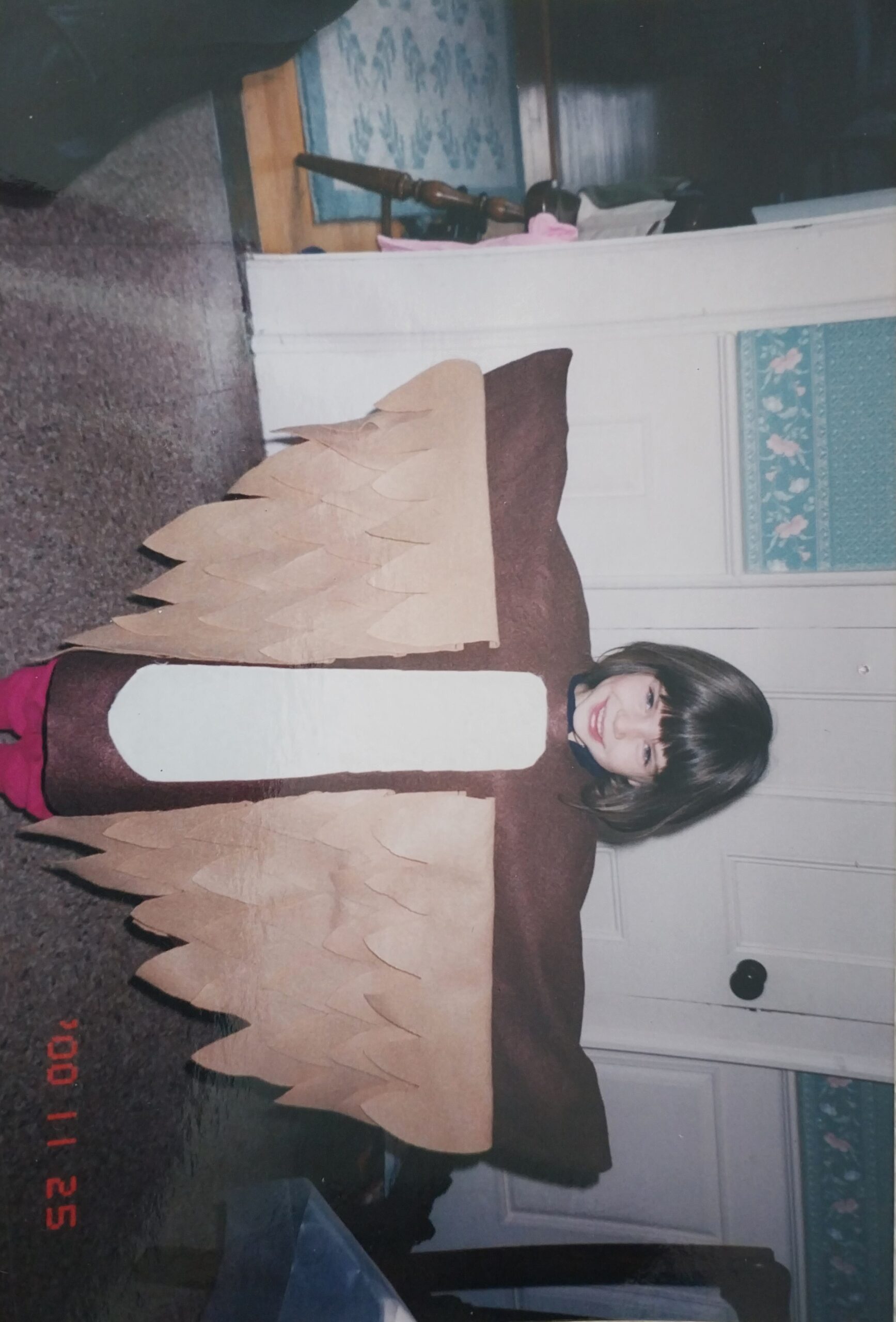
There are a lot of memories at PCA for me. I think one memory that really stands out is, oh, gosh, I could go so many places with this, but I think I’ll choose seventh grade. Tim Hafner was my teacher, and junior high can be challenging. It’s challenging socially, it’s challenging figuring out who you are and what your identity is, and what that means for how you interact with your peers, and I was so excited to have Tim as my teacher. My sister had had Tim Hafner a couple years before I did, and I knew that he was a great teacher, but I think what I didn’t know was how much he was going to impact us in terms of our social, emotional, and spiritual development. And he was a great teacher, but what I remember from seventh grade was that he created a culture where we knew that we were safe, and we knew that this was a place where we were going to reflect God’s heart for each other. It’s so easy for junior high to turn into this cliquey, kind of small groups that are fighting against each other’s situation. And the unity that we had in seventh grade, I feel like is fairly unique amongst people that I know from other places and their junior high experiences. I’m so grateful for that culture that he created that then carried us through because so many of us continued onto PCA in high school and we had great teachers [in high school] who fostered great culture, but I think so much of it started in junior high that we were able to carry that through and cross some of these stereotypical group boundaries that you might expect to see.
I think that’s a piece, too, that it’s so exciting to know that some of the teachers that were so influential for me are still there: Dr. Gamble, Mr. Beal, Mr. Foley. And at the same time, there are so many others who were integral to PCA’s development and who PCA is as a community, that their season at PCA was so necessary, so impactful, but then God’s led them to other things. I know Mrs. Watson is one who was so impactful for me and my confidence in my decision to go into missions, and then after I graduated, I watched her go and do missions with her husband, after she’d led us on the short-term missions for so many years. And I still keep in touch with her as well. So that’s great! It’s sad for PCA to lose some of these phenomenal teachers, but it’s awesome watching them live out what they taught us about following God where He leads you and watching them create impact for the kingdom in a different way in a different season of life.
So, in 2013, you graduated PCA, and what do you remember about that? Those feelings/emotions that day?
I was so thankful for our class and for our teachers and how prepared I felt going into college. That’s something that I’ve been really fortunate to have at different points in my life. I graduated valedictorian, so I had a speech, and I remember going up and just being so thankful for the preparation that our parents had given us by going to PCA. For the preparation that the school had instilled us with to be able to feel confident going up in front of a huge crowd of people and giving a speech. Everybody references Mr. Beal. All of us who feel really confident and comfortable with public speaking, everybody knows it’s because of Mr. Beal’s public speaking training in 10th grade, and I still hold that to this day. And I remember Andrew Cunningham and Gabby Martin (now Laflamme). They had a worship song that they played at graduation. And that song has carried me through a lot of challenging seasons. They played “Called Me Higher” by All Sons & Daughters. And I think that those things together really…really demonstrated what PCA did for us. I recognize it so much more now, lots of years later, but even at the time, I remember recognizing just how special it was for us to feel so prepared academically and spiritually, to step forward into the world.
Where did God lead you after graduating?
I went to Texas to the University of Mary Hardin Baylor, a small private Christian school, and I got my nursing degree. I knew that missions were the goal, but I also knew that a time of preparation would be really important. So, I worked at a hospital in Texas for two years at the Baylor Scott & White hospital system, and I got a variety of experiences in those two years. I worked in adult hospice oncology, then I worked pediatric med surg. And then I went to an organization called GoCorps, which helps 20-somethings serve for two years using their degree, and they connected me to an organization called One Collective. So, through GoCorps, with One Collective, I moved to Ecuador in 2019 and served in a couple of different roles but used my nursing skill set for their ministry down there. And exactly a year ago, I transitioned away from my time in Ecuador. God made it really clear that He was saying, “this is the time and I have something new for you.” And so, I transitioned to the Middle East and am now serving with Samaritan’s Purse as a Health Program Manager for their team here.
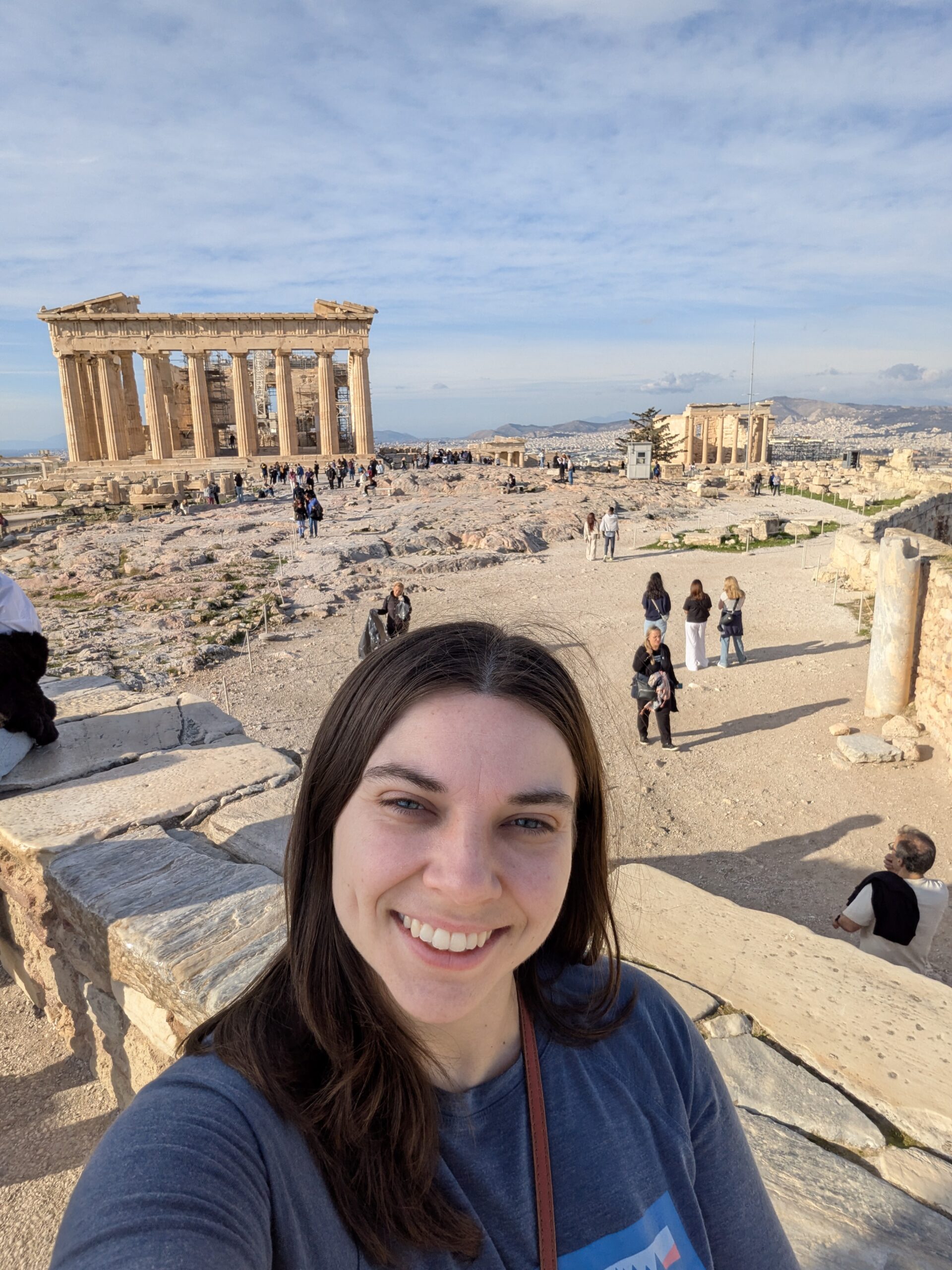
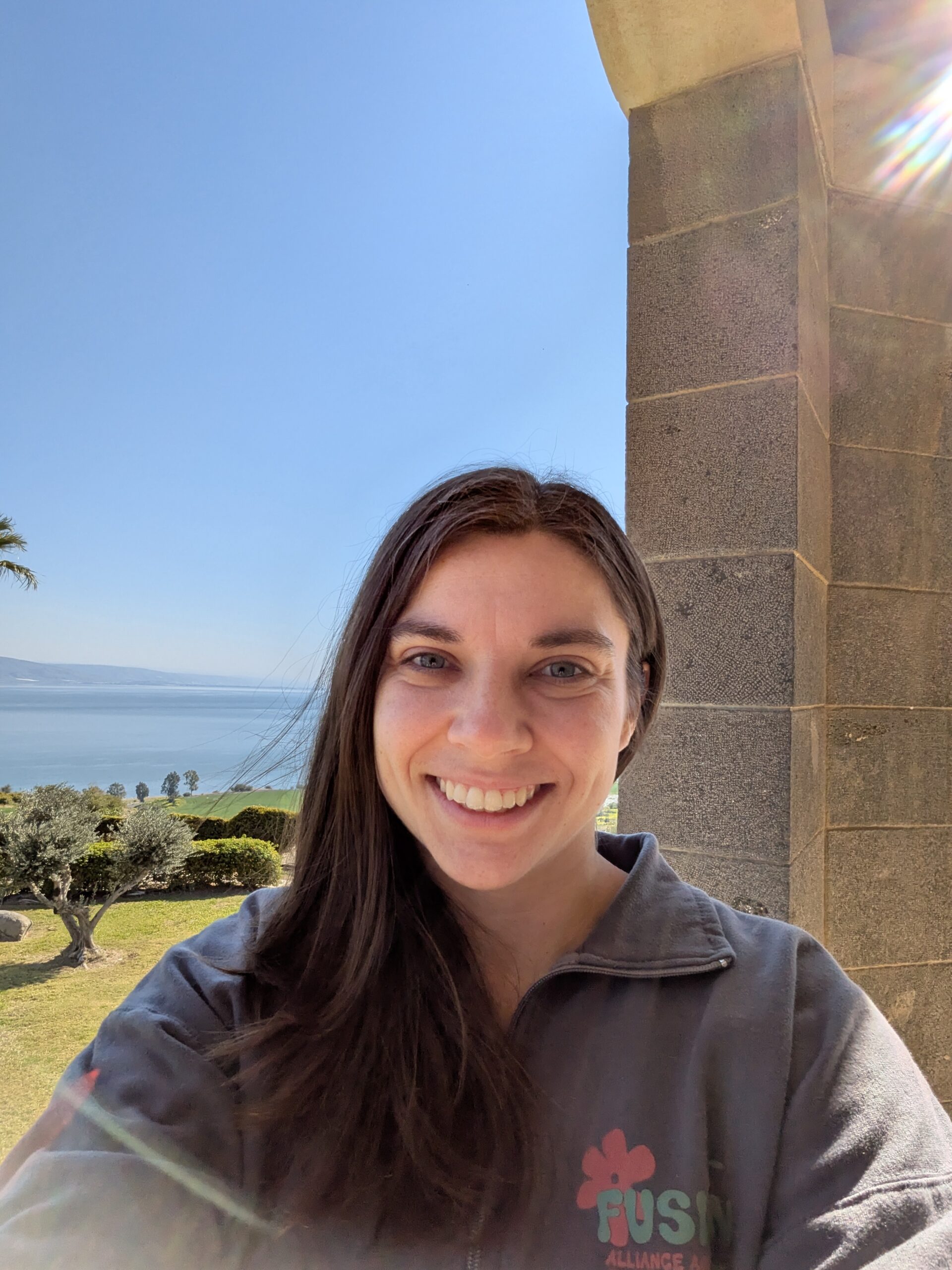
You have been here for a year now and now you are in a serious situation. This has been risky for you. Tell me about what you are experiencing.
I think Ecuador prepared me well in one sense…living overseas and frankly, life in general, is never fully calm. And that’s certainly been my experience living internationally. When I got to Ecuador, the next day we had nationwide strikes that were the most intense that Ecuador had had in about 15 years. I started my time living internationally in a situation that was somewhat chaotic, and then, a few months later – COVID. I had to learn how to navigate through that. I would always say when I was in Ecuador, that it was somewhat of a miracle that I stayed on the field, despite some of the chaos of my transition. I still think that’s true. I also think that God was really preparing me for the types of scenarios that He would have for me that I had no idea that my future might hold. There was a lot that happened in Ecuador that helped me learn to stay grounded, stay connected, stay with my eyes focused where they need to be in situations of uncertainty. That’s definitely being put to the test here. It looks different. It’s a different situation. I’m really grateful for all of the preparation that Samaritan’s Purse has in place. I feel like we are as safe and secure and prepared as we can be. I’m also really confident in the work that we are doing here. But a lot of that skill set that I learned when I was in Ecuador has certainly come into play here. I have had the veil taken away about the amount of control we have in life. I think COVID did that for a lot of us. We talk about COVID being so hard because there was so much uncertainty, and I don’t think COVID created the uncertainty. I think COVID revealed uncertainty that always existed. Consequently, it forced a lot of us to have to trust God for the next thing because we didn’t know what was happening.
There’s enough routine in life that we can choose to ignore the uncertainty sometimes. But God’s put me in different places where I haven’t had the choice to ignore it. The beauty of that is that it has forced me to walk in a way where I’m recognizing God’s hand of provision in every step instead of deluding myself into thinking that it’s me and my control.
In Ecuador, did you use your nursing degree? Did they have you doing anything else, or were you fairly busy with that?
Yeah, so the first two years I was there, I worked as the house nurse for Casa Adalia, which was a residential home for young women and their children coming out of human trafficking, domestic violence, and other vulnerable situations. So it was kind of a combo house nurse/house mom type role, depending on the situation. Then after those two years, I transitioned to being the Coordinator of Health Initiatives for all nine of our ministries there, under the umbrella of Youth World. I did a lot of support for the ministries to say, what does holistic health look like in your ministry’s context? And how can I help support you to integrate that more fully into the work that you’re doing? It was primarily nursing, but it has certainly not been clinical nursing for the most part.
How about your last year? What does your mission work look like now?
Now I’m the Health Program Manager for our team. I am in charge of any health-related programs that we are doing. That could be primary care clinics. We’re working through partners, so I’m helping support our partners using some of that training that I got in Ecuador of “how do I help you and empower you to feel capable and confident to put on quality healthcare programming?” I’m doing a lot of data collection, reports, lots of computer work. But also a lot of the vision casting, which is really exciting for me. For example, what does it look like for our office to choose to support health programming that is impacting people’s physical lives and pointing them towards the gospel? It could be primary care clinics, it could be first aid trainings, it could be bringing in medications or medical supplies. It’s really broad depending on the context, but ultimately our goal is transforming lives physically and spiritually.
Our partners are the ones who are implementing all the programming. I’ll go and do site visits and meet and see how I can support our partners. They are the ones who are actually on the ground providing the care, distributing the supplies, whatever that program looks like.
Where are Mr. And Mrs. Pease now, and how do they feel about you being in the Middle East doing this work?
Mr. and Mrs. Pease are in Tennessee. They retired there about a year ago, and they’re still back and forth to New England, but they are, I’m sure, concerned about me as their daughter, but they have always been incredibly supportive of this idea that you go where God has sent you. That is so meaningful to me, and that’s the way that they raised me, but there’s a difference between knowing that theoretically and watching it happen in front of you. My mom has this quote that I love that she would always tell my sister and I. She says, “we raised you girls to be independent, and then you were, and I didn’t know what to do!”.
This has been such an amazing journey that God has brought me on so far, and I’m so excited to see what the next phases of the journey look like. But you don’t know, right? I knew when I was nine years old that God was inviting me into missions, and I still had no idea what that would actually look like. My parents are so supportive of me following the path that God has and you don’t know what sacrifices that entails until you’re living it. I’m so grateful that they’ve continued to be supportive in the midst of some of those sacrifices, which has allowed me to continue to be confident in the path that I’m on.
Was there anybody at PCA that influenced you as far as missions go?
Kathy Watson was definitely the biggest influence. I went with her to Belize on a short-term mission when I was in high school, and she just has such a passion for the work that God is doing globally. And she was always so encouraging of being willing to hear and obey that call, whatever it looks like in your life. That could look like being in a secular research lab for however many years and being a light to the people around you, or that could look like flying across the world to Papua New Guinea to serve at a school there like she has done. But whatever it means to listen to the steps that God is putting in front of you, that’s where you want to be. She was always such a huge influence for that.
What is a slice of wisdom or piece of advice you would give to the current PCA Upper School students?
I would tell them; that whether you are incredibly confident that you know what the future will hold, or you’re in a place where you really don’t have it figured out yet, be open to the twists and turns that God is going to put into your life. His path is so much better than anything that you can imagine right now and getting to walk that with Him is such a fun part of the journey. The future is real, the future can be scary, but the future can be really amazing, too.